
February 2023, study conducted by Famivita with more than 2,100 participants between December 19, 2002 and January 2, 2023: About 4 million women have never sought gynecological care. This data is part of the survey “Expectations of Brazilian women about their sexual and reproductive life: The relationship between gynecologists and obstetricians and their patients”, commissioned by the Brazilian Federation of Gynecology and Obstetrics Associations (Febrasgo) and conducted by the Datafolha Institute.
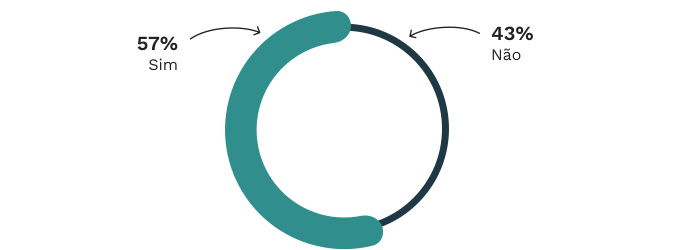
This situation is concerning, especially when we consider that it is through this type of routine consultation that disease prevention can be accomplished, in addition to additional benefits such as better pregnancy planning for those who dream of becoming mothers. It is also through regular visits to this professional that teenagers receive important guidance, related to healthy development and the beginning of their sexual life. Closely linked to this, our latest study found that 43% of Brazilian women do not undergo routine gynecological exams.
Do you have your routine gynecological exam every year?
Trust
The gynecologist is usually the trusted doctor, that person who advises and guides a woman in taking care of her body and how she can improve her quality of life. The survey requested by the Federation also showed that women consider gynecology fundamental.
So much so, that when asked which medical specialty is most essential to women's health, about 8 out of 10 mentioned this field of Medicine. Next, participants mentioned general practice and cardiology. And related to this topic, our study found that 50% of women reported that they currently do not have a regular gynecology professional providing care.
Are you currently seeing a regular gynecologist?

- Especially in the 18 to 24 years age group, women do not have this type of consultation, with 58%.
- In the 25 to 29 years age group, 34% of them answered negatively.
- Among women who are trying to get pregnant, 64% reported going to this routine visit.
- In the 18 to 24 years age group, 60% explained that they do not have a regular professional attending to them.
Reception and Care
The term "gynecology" refers to the knowledge of the female reproductive system, its health, and diseases linked to it. It is closely related to "obstetrics"—a specialty more focused on childbirth and activities related to this event.
And, according to Febrasgo, it was also found that, in general, what most patients seek when attending this type of consultation is care and attention, along with the provision of clear and sufficient information. Our study also found that 58% of women do not have direct contact with a professional in this field.
- Among women trying to conceive, 41% said they have this more direct contact.
- Tocantins was where the highest number of patients reported such contact with professionals, with 78% responding affirmatively.
- Rondônia is the region where the fewest patients have this kind of closer relationship with these professionals.
Ranking of the states where Brazilian women are being attended by a regular gynecologist
- 1.Roraima
- 2.Piauí
- 3.Amapá
- 4.Espírito Santo
- 5.Rio Grande do Sul
- 6.Amazonas
- 7.Pernambuco
- 8.Bahia
- 9.Paraíba
- 10.Santa Catarina
- 11.Paraná
- 12.Mato Grosso
- 13.Rondônia
- 14. Distrito Federal
- 15.Acre
- 16.Ceará
- 17.São Paulo
- 18.Goiás
- 19.Rio de Janeiro
- 20.Minas Gerais
- 21.Alagoas
- 22.Pará
- 23.Rio Grande do Norte
- 24.Maranhão
- 25.Sergipe
- 26.Mato Grosso do Sul
- 27.Tocantins
Index of Brazilian women who have annual routine gynecological exams, by state

Research Method
The study had national coverage and was conducted with over 2,100 women between December 19, 2022 and January 2, 2023. Data collection was carried out by means of an online questionnaire form.
The following questions were addressed:
- Do you have your routine gynecological exam every year?
- Are you currently seeing a regular gynecologist?
- Do you have direct contact with this gynecologist?
To compare results among regions and states, affirmative responses were counted numerically, 1 for “yes” and 0 for “no”. Some questions, with the aim of obtaining more qualitative results, were developed with additional options.


